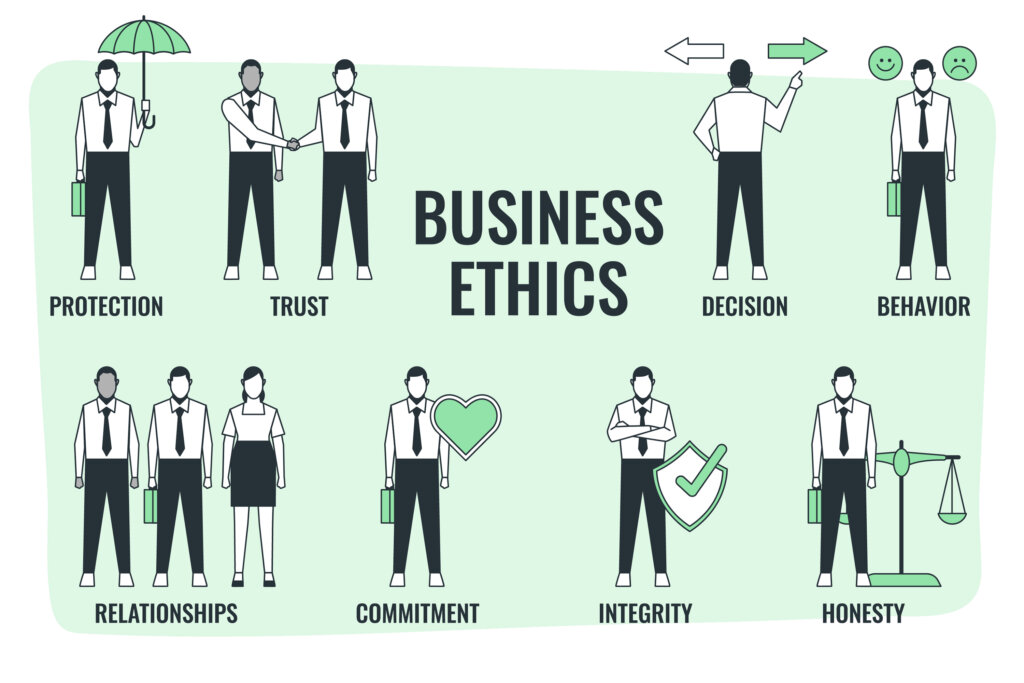
Moral Values in Business That Build Trust and Success, the idea of moral values in business reflects a foundational framework where integrity, honesty, and responsibility guide actions, shaping decisions that influence relationships, reputation, and long term organizational stability in a competitive and ever evolving environment.

In contemporary commerce, success is no longer measured solely by financial performance. It is also defined by how organizations conduct themselves, how they treat stakeholders, and how consistently they uphold principles that foster trust and credibility across every interaction.
The Core of Ethical Foundations
At the heart of every resilient organization lies a set of values that informs behavior and decision making, creating a moral compass that ensures consistency even in complex or uncertain situations.
These values provide clarity. They establish boundaries. They guide individuals toward actions that align with both organizational goals and broader societal expectations.
A strong ethical foundation reduces ambiguity and fosters confidence, allowing teams to operate with a clear understanding of what is right and what is expected.
Trust as a Strategic Asset
Trust is a powerful yet delicate asset that develops over time through consistent actions that reflect honesty and reliability in every aspect of business operations.
Organizations that prioritize moral values cultivate trust among employees, customers, and partners, creating relationships that are durable and mutually beneficial.
Trust enhances collaboration. It supports loyalty. It strengthens the overall ecosystem in which the organization operates.
Integrity in Daily Operations
Integrity is expressed through everyday actions, from transparent communication to fair decision making, ensuring that principles are not merely stated but actively practiced across all levels of the organization.
This consistency reinforces credibility, demonstrating that commitments are honored and that ethical standards are upheld regardless of circumstances or pressure.
Integrity builds confidence. It reinforces accountability. It ensures that actions align with declared values.
Fairness and Respect in Workplace Culture
Fairness and respect are essential elements of a positive workplace culture, influencing how individuals interact, collaborate, and contribute to shared objectives within the organization.
When employees feel valued and treated equitably, they are more likely to engage fully in their roles, contributing to a culture that supports innovation, productivity, and mutual respect.
This environment fosters inclusivity. It encourages cooperation. It strengthens organizational cohesion.
Responsibility Toward Stakeholders
Organizations have a responsibility to consider the impact of their actions on a wide range of stakeholders, including employees, customers, communities, and the environment.
This responsibility extends beyond compliance, requiring a proactive approach that prioritizes ethical considerations in both strategic planning and daily operations.
Responsibility promotes awareness. It encourages accountability. It ensures that decisions reflect a broader perspective.
Transparency as a Driver of Confidence
Transparency plays a crucial role in building confidence, as it allows stakeholders to understand the rationale behind decisions and the direction of organizational strategies.
Open communication reduces uncertainty and fosters trust, creating an environment where individuals feel informed and engaged in the organization’s journey.
Transparency enhances clarity. It supports alignment. It reinforces credibility in both internal and external relationships.
Long Term Success Through Ethical Consistency
Sustained success is closely linked to the consistent application of moral values, ensuring that growth is achieved without compromising integrity or stakeholder trust.
Organizations that maintain ethical consistency are better positioned to navigate challenges, adapt to change, and build lasting relationships that support ongoing development and resilience.
Consistency creates stability. It reinforces identity. It supports a long term vision grounded in trust and responsibility.
Leadership and the Influence of Values
Leadership plays a pivotal role in embedding moral values within an organization, as leaders set the tone for behavior and establish expectations that guide how principles are applied in practice.
Leaders who exemplify ethical conduct inspire others to follow suit, creating a culture where values are not only understood but actively embraced and reflected in everyday actions.
This influence shapes behavior. It reinforces standards. It ensures that values remain central to organizational identity.
Navigating Challenges with Ethical Clarity
Business environments are often characterized by complexity and uncertainty, requiring individuals to rely on ethical clarity to navigate challenges effectively and responsibly.
Clarity enables decision makers to evaluate options with confidence, ensuring that actions align with established principles even when faced with competing priorities or external pressures.
This approach promotes resilience. It enhances decision quality. It supports outcomes that are both effective and principled.
The Lasting Impact of Value Driven Practices
The significance of moral values in business lies in their ability to create organizations that are trustworthy, resilient, and purpose driven, where integrity, fairness, and responsibility guide every action, fostering relationships that endure and supporting sustainable success in a dynamic and competitive global landscape.